
Managing Project Timelines in the Tech Industry
How to manage project timelines in the Tech industry
TECHNOLOGYSTARTUPMANAGEMENT
Praveen
11/29/20252 min read

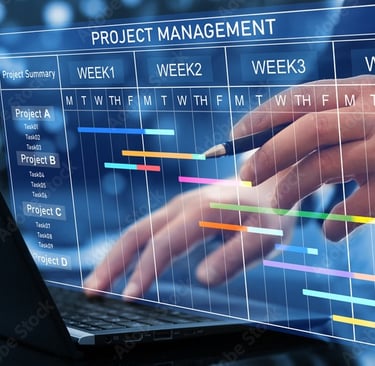
Creating a Realistic Project Timeline for Projects Inside a Tech Startup
Tech startups thrive on speed and innovation, but that often leads to chaotic project management. A realistic timeline ensures that projects — whether it’s building a new feature, migrating infrastructure, or running a marketing campaign — are delivered on time without burning out the team. Here’s how to structure one effectively.
🔍 Step 1: Understand the Project Context
Define the objective: Is this project about product development, operations, or growth?
Clarify stakeholders: Who needs to be involved — engineers, designers, marketers, or external partners?
Identify constraints: Budget, team size, and technical dependencies all shape the timeline.
🧩 Step 2: Break Down Deliverables
Decompose tasks: Split the project into smaller, trackable units (features, modules, campaigns).
Prioritize: Use frameworks like MoSCoW (Must-have, Should-have, Could-have, Won’t-have).
Dependencies: Map tasks that rely on others to avoid bottlenecks.
⏱ Step 3: Estimate Time Realistically
Use historical data: Reference past projects to gauge effort.
Consult the team: Developers and designers often know best how long tasks take.
Add buffer time: Account for unexpected bugs, pivots, or resource changes (10–20% is common).
👥 Step 4: Assign Roles and Responsibilities
Single ownership per task: Avoid confusion by making one person accountable.
Cross-functional syncs: Encourage collaboration between engineering, design, and business teams.
Communication cadence: Weekly stand-ups or sprint reviews keep everyone aligned.
📊 Step 5: Choose the Right Timeline Structure
Agile sprints (2–4 weeks): Best for iterative product development.
Gantt charts: Useful for projects with clear dependencies (e.g., infrastructure migration).
Kanban boards: Ideal for continuous workflows like customer support or marketing.
🔄 Step 6: Build Flexibility into the Timeline
Regular checkpoints: Review progress and adjust deadlines if needed.
Pivot readiness: Tech startups often change direction quickly — timelines should adapt.
Rolling updates: Keep investors and leadership informed with updated roadmaps.
📌 Example Timeline: Feature Rollout in a Tech Startup
Planning & Research - 2 weeks - Define scope, gather requirements
Design & Prototyping - 3 weeks - Wireframes, UX testing
Development (Sprint 1–2) - 6 weeks - Build core functionality
QA & Testing - 2 weeks - Bug fixes, performance checks
Beta Release - 1 week - Limited user rollout
Feedback & Iteration - 2 weeks - Adjust features based on feedback
Full Launch - 1 week - Deploy to all users
🎯 Key Takeaways
Break projects into phases with clear deliverables.
Estimate time with input from the team and add buffers.
Assign ownership and encourage cross-functional collaboration.
Use agile methods for flexibility and adaptability.
Keep timelines transparent and updated for stakeholders.
Solutions
Intuitive solutions for complex business problems.
Consulting
Expertise
+91 88972 99577
© 2025. SHPPRR. All rights reserved.